November 5, 2026
Gutters don't get much attention until something goes wrong. Water spills over the edge during a heavy rain, ice builds up along the roofline, or you notice a soggy spot in the mulch beds that never quite dries out. By then, the wrong gutter system may have already started causing damage to your fascia, siding, or foundation.
The good news is that picking the right gutters isn't as hard as it sounds once you know your options. Gutters come in different shapes, materials, and sizes, and each one has its own strengths. Below, we'll walk through the most common types and explain how our roofing contractor team helps homeowners decide which system fits their home, budget, and local weather.
Comparing Gutter Profiles and Shapes
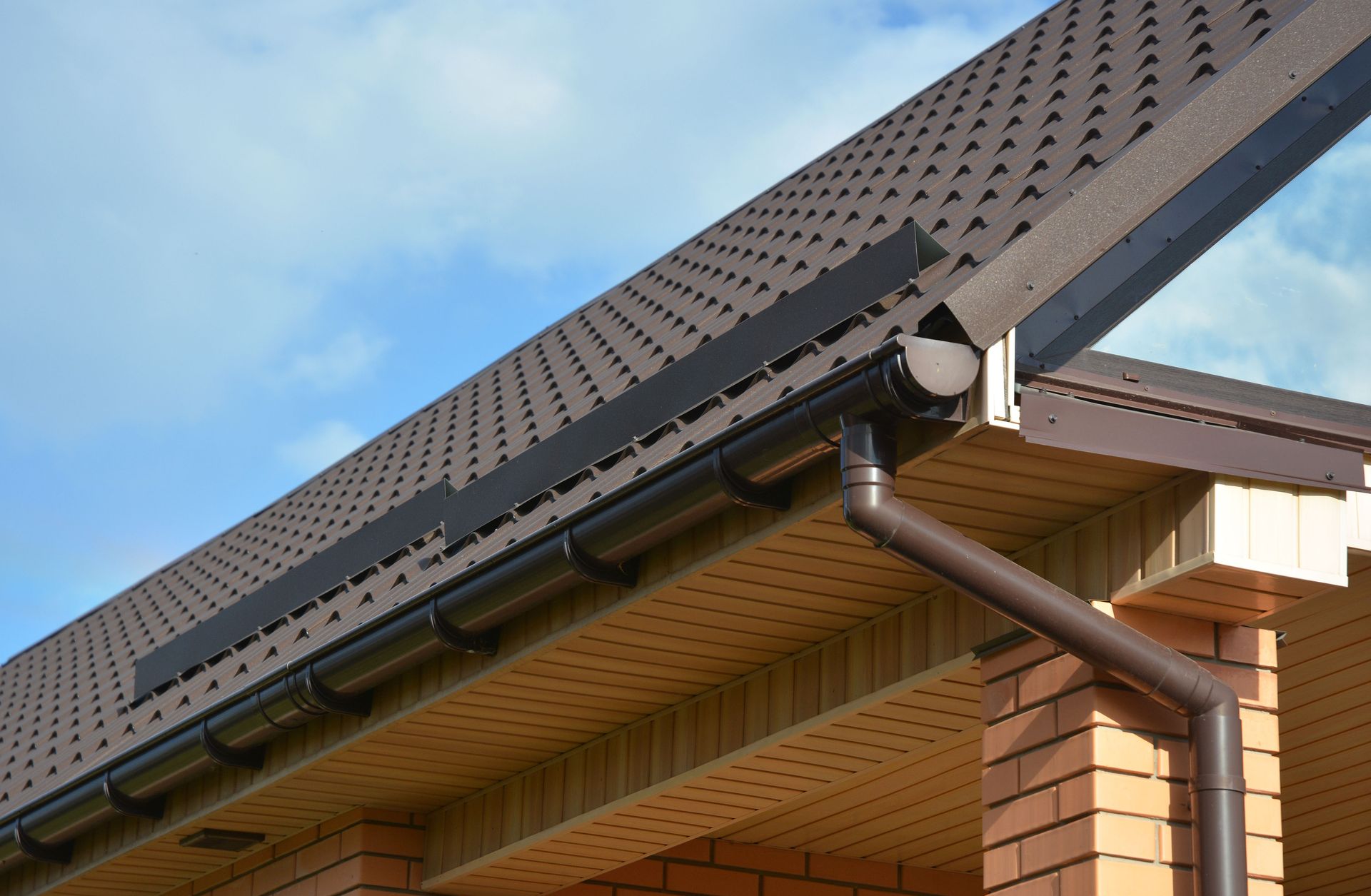
The profile is the shape of the gutter when you look at it from the end. K-style gutters are the most common choice on homes today. They have a flat back and a decorative front that looks a bit like crown molding, and that shape lets them hold more water than a round gutter of the same width. They also mount flat against the fascia board, which makes them sturdy and easy to blend with most home styles.
Half-round gutters have a simple, curved trough that's popular on older and historic homes. They drain well and tend to shed debris easily, though they usually hold a little less water than K-style gutters. Box gutters and fascia gutters are less common. Box gutters are often built into the roof structure on older buildings, while fascia gutters are designed to replace the fascia board for a clean, streamlined look.
Choosing Between Seamless and Sectional Gutters
Sectional gutters come in pre-cut lengths that get joined together on-site. Every joint is a spot where leaks can start, especially as sealant ages and the gutters expand and contract with the seasons. Over time, those seams may drip, rust, or pull apart, and that's when water starts landing where you don't want it.
Seamless gutters are formed from a continuous piece of material that's cut to fit the exact length of each roofline. With seams only at the corners and downspouts, there are far fewer weak points for leaks. They also look cleaner from the street. For most homes, our roofing contractor crew recommends seamless gutter installation because it holds up better and needs fewer repairs down the road.
Weighing Aluminum Gutters
Aluminum is the most popular gutter material, and it's easy to see why. It's lightweight, it won't rust, and it comes in a wide range of colors that can match your trim or siding. It's also affordable compared to premium metals, which makes it a smart fit for many homeowners.
Aluminum gutters also offer solid longevity. According to Today's Homeowner, aluminum gutters often last around 25 years when they're installed correctly and kept up with regular maintenance. The main drawback is that thinner aluminum can dent from ladders, falling branches, or heavy ice. Choosing a thicker gauge and having them installed by a pro can help them hold their shape for years.
Considering Vinyl Gutters
Vinyl gutters are the budget option. They're light, they won't rust or corrode, and they're simple to cut and fit. In mild climates, they can work fine for a while, especially on smaller structures like sheds or detached garages.
The trouble is that vinyl doesn't love temperature swings. In cold weather, it can turn brittle and crack, and strong sun can cause it to fade or warp over time. For homes that deal with snow, ice, and freeze-thaw cycles every winter, vinyl usually isn't the most durable pick. It's worth comparing the upfront savings against how often you might need to replace it.
Looking at Steel Gutters
Steel gutters are tough. Galvanized steel can handle heavy snow loads, falling limbs, and ladder contact better than aluminum or vinyl, which makes it appealing in areas with rough winters. If you've had problems with gutters bending or sagging in the past, steel's strength is a real advantage.
That strength comes with trade-offs, though. Steel is heavy, so it needs a solid fascia and secure hangers to stay in place. It can also rust once its protective coating wears down, particularly at cut edges and scratches. Stainless steel resists rust much better, but it costs considerably more, which is why many homeowners save it for specific projects.
Exploring Copper and Zinc Gutters
Copper gutters are the high-end option, and they bring a look no other material can match. They start out bright and gradually develop a blue-green patina that many people love on historic or upscale homes. Copper doesn't rust, and it can last for decades with very little upkeep.
Zinc offers a similar long life with a soft gray finish that ages gracefully. Both materials cost much more than aluminum or steel, and they require skilled installation since the seams are typically soldered. If curb appeal and longevity are your top priorities, they're worth a look, but most homeowners find that a well-installed aluminum system gives them better value.
Matching Gutter Size to Your Roof
Even the best gutter material won't help if the gutters are too small. Most homes use 5-inch gutters, which handle typical rainfall on average-sized roofs. Larger roofs, steep pitches, or homes in areas that get heavy downpours may need 6-inch gutters to keep water from overflowing the edge.
Downspouts matter just as much. Bigger or additional downspouts move water away faster, which reduces strain on the gutters and keeps water from pooling near your foundation. When our roofing contractor team sizes a system, we look at the square footage of each roof section, the pitch, and where the water naturally wants to go. That way, your gutters can handle the worst storms, not just the average ones.
Adding Gutter Guards to Your System
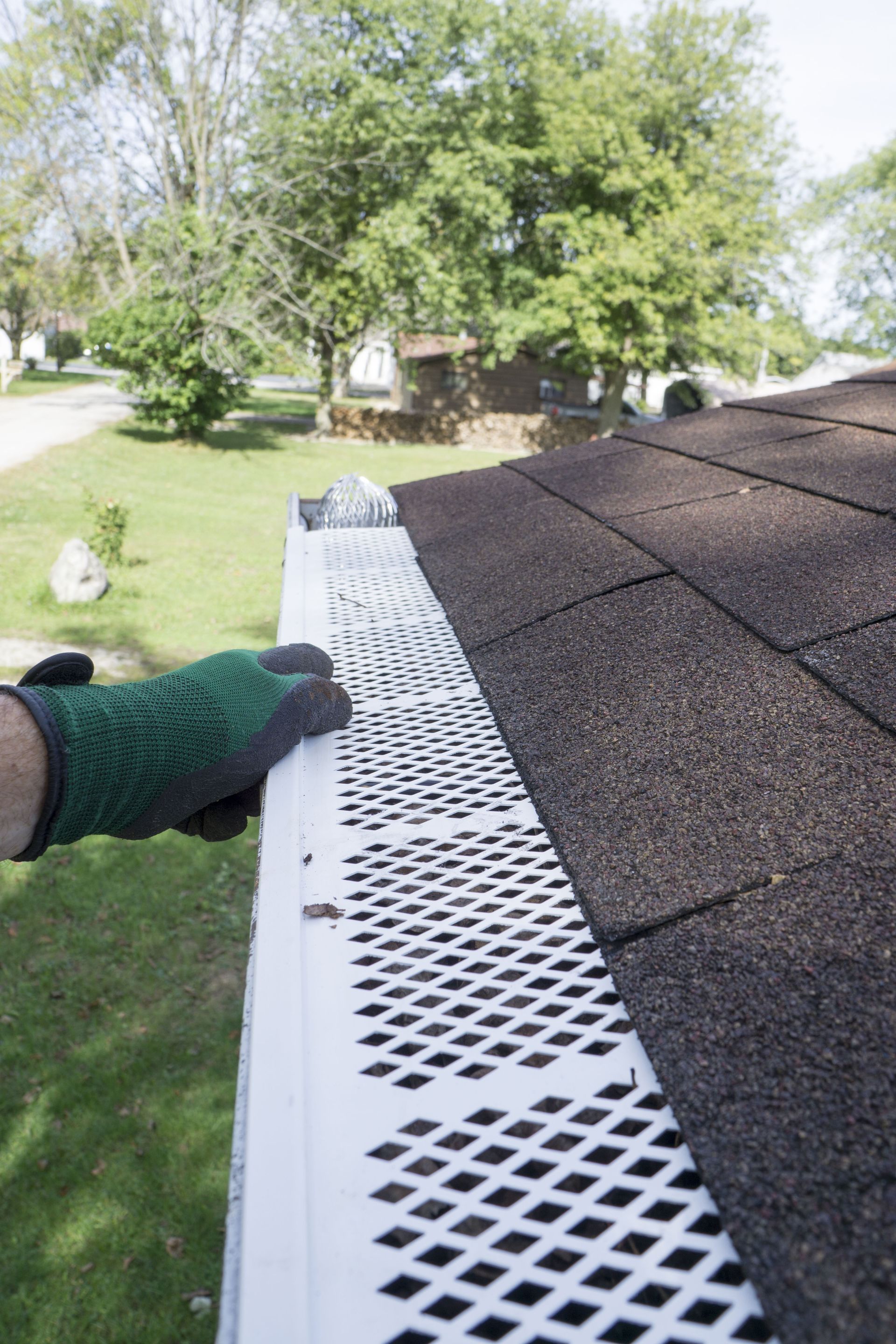
Gutter guards cover the top of the gutter and help keep leaves, pine needles, and debris from clogging the trough and downspouts. Clogged gutters overflow, and in winter, trapped water can freeze and add heavy weight to the system. Over time, that strain may loosen hangers and damage the fascia boards behind them.
There are several styles, including mesh screens, micro-mesh, and solid surface guards that let water curl inside while debris slides off. The right guard depends on the trees around your home and the type of gutter you have. Pairing new seamless gutters with high-quality guards can cut down on maintenance and help your whole system last longer.
Picking the Right Gutters for Your Home
So, which gutters should you choose? For most homes, seamless aluminum K-style gutters strike the best balance of cost, durability, and appearance. If your home sees heavy snow and falling limbs, a heavier gauge or steel may make more sense. If you own a historic home or want a standout look, half-round copper could be worth the investment.
Your roof also plays a big role in the decision. Gutters need to work with your roof's pitch, drip edge, and drainage paths, which is why it helps to have a local roofing contractor like ours look at both together. A gutter system that's matched to your roof will move water away more effectively and protect your siding, landscaping, and foundation for years.
At Turner & Sons Roofing & Siding LLC, we've been helping Connecticut homeowners protect their homes for decades. As a family-owned, veteran-operated roofing contractor, we know how much our New England weather can test a gutter system. We install seamless gutters and gutter guards, handle gutter repairs and replacements, and offer free estimates with transparent pricing. Our roofing contractor team can help you compare your options and choose a system that fits your home and budget. Contact Turner & Sons Roofing & Siding LLC today to schedule your free gutter estimate.